
The Warmth of Winter: Uniting India Through Lohri and Makar Sankranti
There is a distinct feeling in the air across India in mid-January. The biting chill of winter begins to recede, giving way to the first hints of a comforting, golden sun. It is a time when the earth seems to wake up from a long slumber. But more than the change in weather, it is the spirit of the people that shifts.
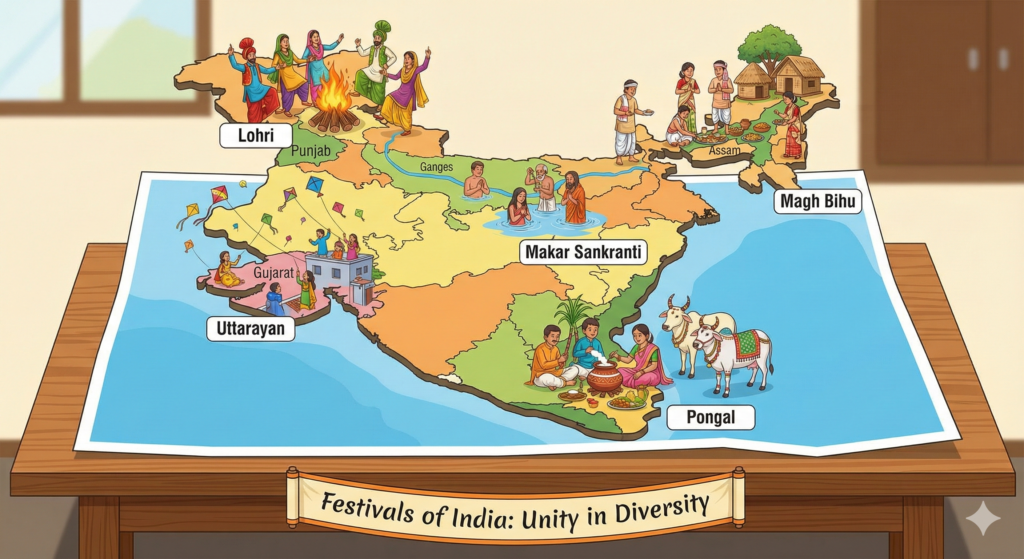
From the crackling bonfires of Punjab to the colorful kite-filled skies of Gujarat, India gears up to celebrate two festivals that are distinct in their rituals but identical in their soul: Lohri and Makar Sankranti.
While they may fall on consecutive days and bear different names, they tell a single, beautiful story—one of gratitude, harvest, and the warmth of togetherness.
The Night of Fire: Understanding Lohri
Celebrated primarily in Northern India, especially Punjab, Lohri marks the passing of the winter solstice. It is the longest night of the year, but it is celebrated with enough light to rival the day.
The Origin and Folklore
Lohri is deeply rooted in the agricultural cycle, marking the harvest of the Rabi crops. But for the people, it is also about the legend of Dulla Bhatti. Often called the “Robin Hood of Punjab,” Dulla Bhatti lived during the Mughal era and was known for rescuing girls from the slave trade and arranging their marriages with honor. On Lohri, folk songs are sung in his praise, reminding us that this festival is not just about crops—it is about protecting the honor of the community.
How It Is Celebrated
As dusk falls, communities gather around a large bonfire. The fire is not just for warmth; it represents Agni (the Fire God), to whom people offer sesame seeds, jaggery, peanuts, and popcorn. The air fills with the beat of the Dhol, and the energy of Bhangra and Gidda dancers is infectious. It is a night where old grievances are burned away in the flames, and hearts are warmed with rewari and gajak.
The Morning of Light: The Significance of Makar Sankranti
If Lohri is the celebration of the night, Makar Sankranti is the worship of the day. Usually falling on January 14th or 15th, it marks the astronomical event where the Sun enters the zodiac sign of Capricorn (Makara). It signals the end of winter and the beginning of longer, warmer days (Uttarayan).
The Spiritual Shift
In the past, sages believed this transition was a time for spiritual awakening. Today, that significance remains. Millions flock to the Ganges and other holy rivers for a sacred dip, believing the water purifies the soul. It is a day of introspection, charity, and looking toward the light.
How It Is Celebrated
The celebration of Sankranti changes flavor every few hundred kilometers:
- In Maharashtra: People exchange multi-colored halwa and sesame sweets (Til-Gul), saying, “Til gul ghya, god god bola” (Accept this sweet and speak sweetly). It is a beautiful reminder to resolve conflicts.
- In Gujarat and Rajasthan: The sky becomes a battlefield of colors. The International Kite Festival turns the heavens into a mosaic, symbolizing man’s reach for the divine sun.
Different Threads, One Fabric: How They Unite India
It is easy to see the differences between Lohri and Makar Sankranti. One is a loud, energetic community gathering at night; the other is a spiritual, often domestic or daytime observance.
However, the bond they share is unbreakable:
- Gratitude to Nature: Both festivals are essentially harvest festivals. Whether we are offering peanuts to the fire or dipping in the river, we are thanking nature for its bounty.
- The Victory of Light: Lohri fights the winter darkness with fire; Sankranti welcomes the sun. Both are celebrations of light overcoming darkness, and hope overcoming despair.
- Food as a Unifier: Sesame (Til) and Jaggery (Gur) are central to both. Scientifically, these foods keep the body warm. Culturally, they represent the sticking together of communities, just like the sticky jaggery binds the seeds.
In a country as diverse as ours, these festivals are the invisible threads that stitch the map together.
Echoes Across the Land: Similar Festivals
The magic of this time isn’t limited to the North or West. The entire nation vibrates with the same energy under different names:
- Pongal (Tamil Nadu): A four-day festival where the overflowing pot of milk and rice symbolizes abundance.
- Magh Bihu (Assam): Marked by feasts and bonfires (Meji) made of bamboo and thatch.
- Uttarayan (Gujarat): The festival of kites that marks the sun’s journey northward.
Conclusion
As we light the Lohri bonfire or fly a kite high into the Sankranti sky, we aren’t just following a tradition. We are participating in an ancient rhythm of life that our ancestors started thousands of years ago.
In a world that is often divided, these festivals remind us that we all look up to the same sun for warmth and rely on the same earth for food. So this January, let the warmth of the bonfire melt away your worries, and let your spirit soar as high as the kites.
Happy Lohri, Pongal and Makar Sankranti!
Liked it? Read our another post on Pitripaksha